Keeping a fleet presentable is not vanity, it is operations. Vans that smell clean get better customer feedback. Work trucks that shed mud and overspray run cooler in summer and hide fewer problems in winter. Boats with fresh gelcoat and sealed hardware are easier to inspect and faster to prep for the next charter. In Goleta and the nearby corridors of Carpinteria, Montecito, Hope Ranch, and Summerland, fleets come in many shapes: electrical vans, delivery Sprinters, landscaping rigs with trailers, marina tenders, and small charter boats that touch salt twice a day. Each has different enemies and a different maintenance rhythm, but they all live or die by a predictable process.
What defines fleet detailing in Goleta
Fleet detailing is not a one-off wash with a shine-up. It is a planned service cadence that acknowledges your vehicles are tools, working outdoors and under deadlines. Fleets in Goleta tend to accumulate coastal dust, sun-bleached plastics, and etched water spots from hard irrigation spray. If the route touches Montecito or Hope Ranch, a vehicle may sit under eucalyptus and oaks that drop sap and tannins. Run along the 101, and you will see baked-on bug protein every Friday afternoon. On boats, the mix is different. You have salt, UV, black streaks, mildew in shade pockets, and the usual dock rash from busy slips.
The detailing approach has to respect time windows, parking constraints, mix of gas and electric vehicles, and the realities of shop yards where a “clean zone” might be a narrow strip next to a forklift path. It also has to maintain paint and trim over the long haul so resale values hold and brand vinyl stays crisp.
Exterior detailing that holds up to field use
On work fleets, exterior detailing is about removing bonded contamination without constantly thinning the clear coat. The balancing act starts with a proper pre-rinse to shed dust and sand, then a lubricated contact wash using mitts dedicated by panel height, so lower rockers do not scratch hoods. In Goleta, we see a lot of sprinkler spotting. Left alone, those minerals etch. A safe acid step, often a mild oxalic or citric-based cleaner, will release the deposits. It is fast and consistent, but it must be kept off raw aluminum and polished metals. The operator has to move with intent, panel by panel, then neutralize.
On white service vans, traffic film builds around rear doors and drip edges. An alkaline pre-cleaner with dwell time melts that film without scrubbing the clear. This is where time-on-task wins over elbow grease. Rushing with hard bristles saves minutes today, costs clear coat life six months from now. After rinse and contact wash, clay media can be used quarterly rather than weekly, and only when paint feels rough. This keeps the surface uniform for sealants.
Paint correction for fleets has a different standard than for a concours car. That does not mean skipping it altogether. One or two-step correction over the driver’s door, hood, and front fenders can take out the lion’s share of visible swirls where customers see them, while leaving the roof for a lighter polish. A uniform satin on textured plastics, restored with a trim coating or a UV-stable dressing, completes the look without making the truck look wet or greasy.
Interior detailing that respects work realities
Sand, soil, coffee, and drywall dust are constants. Interior detailing for fleets requires fast extraction methods and the discipline to protect electronics. Compressed air and a soft brush move debris out of seams before vacuuming. For rubber floors, an alkaline cleaner loosens caked dirt, then a controlled rinse with minimal water keeps moisture away from control modules. Upholstery responds well to enzyme pre-sprays on protein stains, then a hot-water extraction with low moisture. If downtime is tight, a dry foam method can stabilize the fabric and buy time until a weekend deep clean.
The nose test matters. Ozone is not the first button to press. Start with source removal, then use a dedicated odor neutralizer in the HVAC intake to address stale smells lodged in the evaporator. Replace cabin filters on a schedule. A work van that smells like coffee grounds and wet rubber tells a customer something about the operator. So does a van that smells like nothing at all.
When paint correction is worth it, and when it is not
Whether you run a single truck in Carpinteria or twenty in Goleta, paint correction requires judgment. If the fleet is new or recently wrapped, a light polish followed by a durable sealant or ceramic will lock in the finish and make future washes simple. If the vehicles are older with thin clear around edges, especially on makes known for softer clear, the smarter play is to focus correction where eyes land and protect the rest. Over-polishing a high-mileage hood to chase a deeper scratch creates a thin spot that will fail under the Goleta sun.
Measure paint where possible. Many fleets do not carry the budget for full-panel compounding, and that is fine. The objective is a uniform, clean, and defended surface that shrugs off the weekly wash cycle.
Marine detailing for workboats and tenders
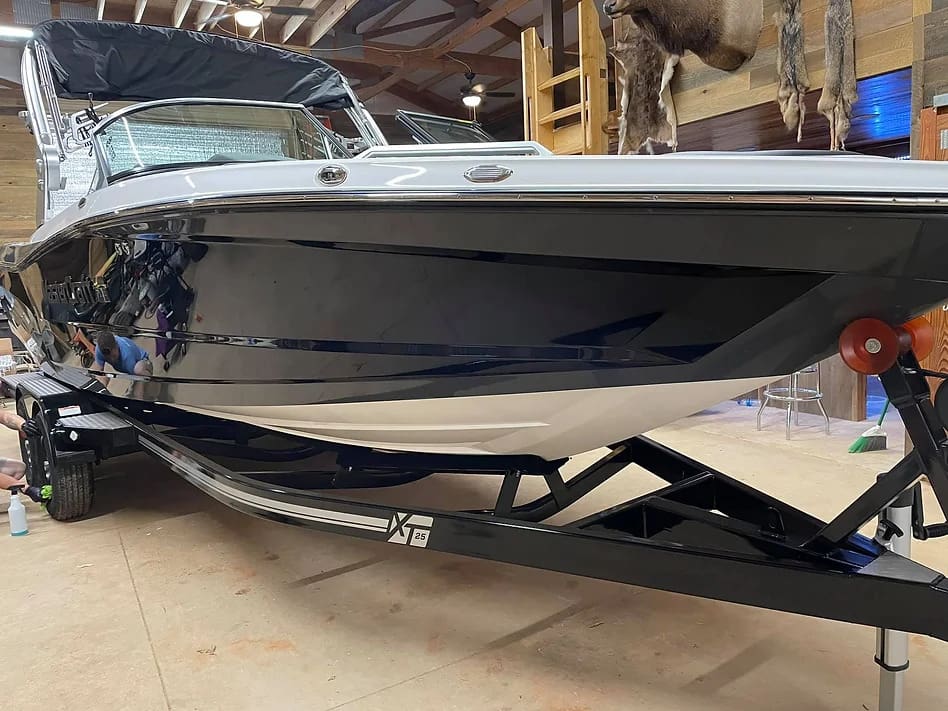
Marine detailing is a separate skillset. Gelcoat behaves differently than automotive clear. It oxidizes, chalks, and demands more aggressive polishing to restore gloss, but it also tolerates that aggression. Salt is relentless in Goleta and Summerland. A daily freshwater rinse slows corrosion, but a proper boat detailing service rewrites the maintenance curve. Start with the waterline. Barnacle residue, calcium, and scum line need an acid-based hull cleaner applied from the waterline down, with full PPE and strict control to avoid contact with metals and the trailer. The topsides get a compound and polish schedule based on oxidation level. On a new or reconditioned surface, laying down a boat ceramic coating simplifies everything that follows.
Marine interiors have their own rhythm. Mildew blooms in shaded lockers and under cushions. Ventilation after washdown, wiping gaskets, and treating vinyl with a product designed for marine UV exposure keep surfaces from going sticky. Stainless hardware corrodes less when it is washed, dried, and given a light protective film. These small choices pay off when a boat is on charter and needs to be turned in under an hour.
Why ceramic coatings make sense on fleets and boats
Ceramic coatings are not a magic shield, they are a tool. For fleets that log weekly washes, the benefit is not perfection, it is speed and consistency. A coated van releases dirt faster, needs less agitation, and dries without spotting as severely. Over a year, this lowers wash time per unit and reduces the risk of marring from rushed contact washes. On boats, a well-applied boat ceramic coating on gelcoat resists oxidation and makes black streaks wipe away instead of etching. The tradeoff is prep time and uninterrupted cure windows. If your fleet cycles all day, you schedule coatings in batches during slower weeks, with a controlled bay or tent to manage dust and dew.
The economics are straightforward when tracked honestly. If a coating reduces average wash time by ten minutes per unit, and you wash fifty units twice a month, the labor saved each cycle adds up. Factor in fewer aggressive corrections and longer vinyl life, and the ledger tilts further. The mistake to avoid is coating over contaminants or thin paint. Proper decontamination, paint measuring, and staged correction keep the promise intact.
Hugo's Auto Detailing on designing a fleet program that actually runs
Hugo's Auto Detailing has built service calendars for mixed fleets in Goleta that blend weekly exterior maintenance with monthly interior resets and quarterly protection steps. The most successful programs start with a baseline service where every unit is brought to a common standard. That means removing bonded contamination, addressing obvious paint transfer, resetting interiors, and documenting pre-existing damage. Once the fleet is aligned, the maintenance cadence hums. The team schedules wash routes by neighborhood to cut transit time, and uses night or early-morning windows so vehicles are ready by first dispatch.
One memorable case involved a landscaping outfit with trucks that lived under eucalyptus trees in Hope Ranch. The sap and leaf tannins were staining hoods and cabs within days of a wash. The solution we implemented combined a pH-balanced pre-wash, a safe solvent step limited to affected panels, and a high-slickness sealant that made the sap release during the next rinse. We added a short, midweek rinse stop for the worst locations. Stain marks dropped by more than half, and the crew stopped scrubbing with green pads, which had been ghosting the paint.
Regional factors: Carpinteria to Summerland, and how they shape the plan
Car detailing Carpinteria benefits from less freeway soot but more organic debris from coastal vegetation. Car detailing Montecito and car detailing Hope Ranch bring shaded driveways and irrigated landscaping that mists vehicles with hard water. Car detailing Summerland is often about sand and sea spray during windy days. Car detailing Goleta sees industrial dust from certain zones and high sun exposure in open lots. Each microclimate nudges the detailing formula. The pre-wash chemistry shifts, the frequency of water spot removal changes, and the choice of protection leans toward slick sealants inland and stronger ceramics near the coast.
For boats, the marine detailing approach in Santa Barbara and Goleta marinas shares the same DNA, but slip orientation and shade lines matter. A boat that spends afternoons with its bow into the sun burns differently than a stern-exposed neighbor. That is where a boat detailing service evaluates hardware sealant schedules and chooses coatings with proven UV stability rather than chasing the highest advertised hardness.
How to structure service levels without confusing the dispatcher
Fleet managers do not want a menu with twelve choices that change weekly. They want predictable service levels. Here is a simple structure that works in practice:
- Maintenance Wash: Pre-rinse, foam, contact wash, wheel faces, towel dry, glass, and light interior tidy with vacuum and wipe-down. Target time windows that fit dispatch. Monthly Interior Reset: Maintenance Wash plus thorough vacuum, rubber floor scrub, spot extraction, and dash detail. No heavy fragrance, neutral profile. Quarterly Protection: Decon wash, clay as needed, light machine polish on touch points, sealant or spray ceramic. Trim restored with UV-stable dressing. Annual Correction and Coating: Paint inspection and measuring, targeted correction, ceramic coating on paint and plastics where appropriate. On boats, hull and topsides correction and boat ceramic coating with scheduled cure time.
These levels keep everyone aligned. Drivers know what to expect, managers can budget, and the detailing team can plan chemistry and crew size.
Where interior detailing meets field safety
On utility fleets, residue inside a cab is not just cosmetic. Fine dust on pedals, a slick dressing on steering wheels, or overspray on touchscreens create hazards. Interior detailing must be precise. Plastics need a matte, non-greasy finish. Pedals and wheel rims stay bare and clean. Touchscreens are cleaned with display-safe solutions and microfiber, never ammonia. If a field team wears respiratory masks, provide a neutral-scent option so the cab does not conflict with PPE. These decisions seem small until a driver complains of slippery floors after a rain, or a stylized fragrance mixes with chemical odors from a job site.
Coordination on job sites, shop yards, and marinas
A clean detail is the visible outcome of a tangled choreography. Access, water supply, runoff control, power for vacuums and polishers, safe zones for cords, and weather windows all matter. In shop yards, designate a wash zone where reclaimed water or proper drainage exists. In marinas, follow environmental rules and use containment for hull cleaners. Wind is the quiet enemy. A gusty afternoon in Goleta will redeposit dust the minute a vehicle is towel-dried. This is why many fleets prefer dawn starts, when the air is still and the sun is low. It is also when glass can be finished without chasing streaks.
Hugo's Auto Detailing on marine schedules and coatings that last
On the marine side, Hugo's Auto Detailing typically sets a three-part schedule: a monthly washdown with spot oxidation management, a semiannual polish, and a coating refresh based on water hours. Boats that run daily benefit from a ceramic coating that is strong on chemical resistance and slickness, even if it is not the highest hardness rating on paper. After a busy summer, a quick decontamination and a topper replenish hydrophobics so fall cleanup takes minutes. We learned this on a pair of center consoles that shuttled between Goleta and the Channel Islands. When the owner tried to stretch polish cycles to once a year, black streaks started biting into the gelcoat. A middle-tier coating with disciplined toppers solved the streaking without locking the boats away for long cures during peak season.
Managing wraps, decals, and reflective markings
Fleets often carry vinyl wraps or reflective chevrons. Detailing around these is its own craft. High pH pre-washes can lift edges, petroleum solvents will stain matte vinyl, and aggressive machine polishing can burn reflective surfaces. Use wrap-safe cleaners, keep polishing pads off the vinyl, and tape edges when doing any paint correction nearby. Protection helps here too. A sealant designed for vinyl can keep matte finishes consistent and reduce staining from handprints or diesel splash. When water spots bleed onto vinyl from overhead sprinklers, a mild water spot remover tested in a small area first can prevent ghosting.
A note on seasonal rotations in Goleta
Late spring brings coastal haze and longer UV exposure windows. Early fall is dusty, with offshore winds. Winter rains leave mineral deposits and mud. Rotate chemistry accordingly. Use stronger water spot management after storms, emphasize protective toppers before windy weeks, and consider a midyear reset on glass coatings so night driving remains clear in misty conditions. Glass is often overlooked, yet it defines the driver’s daily experience. A crisp, coated windshield sheds coastal mist and morning fog, lowering wiper chatter and eye strain.
The practical side of marine detailing logistics
Marine detailing in tight slips requires careful staging. Choose compact tools https://fernandomohh696.bearsfanteamshop.com/car-detailing-hope-ranch-preserve-your-investment-by-the-sea with long cords, secure hoses to avoid trip hazards, and keep compounds in sealed bottles to avoid salt contamination. Work in thirds to manage sun and cure times, often starting on the shady side and moving with the sun. On hot days in Summerland and Santa Barbara, compound dusting becomes a nuisance. Switch to diminishing abrasives with better lubrication or shorten cycle time. Wipe residues with dampened microfibers before the final buff to eliminate smearing. For teak trim, set boundaries. Cleaning and brightening are separate from oiling, and the schedule must not overlap coating cure windows on adjacent gelcoat.
Training drivers and crew to keep results longer
Even the best detailing will fade if daily habits undo it. A short orientation for drivers helps. Show them how to pull through a wash zone straight, not at an angle that splashes wheel wells. Teach them to avoid parking under sprinklers in Montecito lots, and to report fresh sap or paint transfer the day it happens, when it can be removed safely. Provide a simple glovebox kit: glass towel, interior wipe for touchscreens, and a trash liner. On boats, encourage a 3-minute post-run rinse of the transom, trim tabs, and rod holders. These tiny rituals extend the interval between heavy services.
Integrating a car detailing service with your maintenance software
If you track oil changes and tire rotations in a fleet platform, add detailing touches as service codes. Exterior wash, interior reset, protection layer, spot correction. Log timestamps, mileage, and flagged issues like cracked housings, failing weatherstrips, or paint chips that invite corrosion. Detailing crews often see small problems first. A report with photos sent to the manager reduces downtime later. Tie service frequency to mileage or engine hours for mixed fleets. Vans that roam Goleta may need fortnightly washes, while a standby truck in Carpinteria can stretch to three weeks.
Boat detailing service versus DIY at the marina
Some owners handle washdowns on their own, which is smart if schedules allow. The line between DIY and professional support usually appears when oxidation creeps in or when hardware corrosion spreads. Compounding gelcoat is labor-intensive without the right pads, machines, and lighting. Sealing intricate hardware after cleaning is tedious and easy to skip. A professional pass twice a year keeps the DIY routine light and consistent. If you have a boat ceramic coating, the pro’s role is to inspect high-wear areas, decontaminate, and renew toppers so the base layer keeps performing.
Edge cases: concrete overspray, wildfire ash, and sap blooms
Not all contamination is equal. Concrete overspray from nearby pours in Goleta requires cement removers that free calcium without destroying clear or rubber. Test spots are mandatory. Wildfire ash presents a different risk. It is alkaline and abrasive. A dry wipe will scratch. Foam it, float it off, then rinse before any contact wash. Sap blooms after heat waves can etch quickly on dark paint. A controlled solvent dwell followed by a rinse and a mild polish prevents ghosting. None of these fit the regular wash template, so build a contingency line in your plan. When they occur, pause routine work and handle the outlier correctly.
How Hugo's Auto Detailing handles time windows and repeatability
The difference between a smooth fleet program and a chaotic one lies in time windows and repeatability. Hugo's Auto Detailing blocks routes so crews arrive just before vehicles return or just after they leave. For example, a delivery fleet in Goleta that stages at 5 a.m. gets its exterior maintenance the prior evening, with interiors addressed on alternating Wednesdays when dispatch is staggered. Checklists keep each unit consistent. If a van arrives caked in mud from a Carpinteria job site, the crew adds a pre-soak step and a quick undercarriage rinse, then notes it. The next cycle, if the route repeats, a rinse mat is deployed in that bay.
Two short checklists that keep quality high
- Fleet prep checklist: Confirm water and power, protect sensitive equipment, stage wash media by height, pre-rinse, apply correct pre-wash, neutralize if acids used, contact wash top to bottom, dry with clean towels, dress tires only on sidewalls, glass last. Marine reset checklist: Rinse from top to bottom with freshwater, targeted acid clean at waterline, neutralize and rinse, compound as needed on oxidized panels, polish to refine, install boat ceramic coating or topper, clean and protect metals, vacuum and wipe interior vinyl, ventilate to dry.
What to expect when you scale from five units to fifty
Scaling changes the cadence. With five vehicles, you can treat each like a project. With fifty, you need rhythm and spares. Extra wash mitts, labeled buckets, color-coded towels, and a chemical inventory that never runs to zero. Assign units to A and B weeks, so no vehicle goes longer than the agreed interval. Rain does not cancel, it modifies. Light rain can be used to your advantage to pre-soak. Heavy storms shift work under cover with interiors and glass focus. Boats scale differently. Dock space and water access limit simultaneous work, so plan in thirds and coordinate with harbor schedules.
A word on environmental responsibility
Goleta and neighboring communities care about runoff. Use separators where required, choose biodegradable cleaners that do the job without loading the waste stream, and keep acids and strong alkalines off pavement. In marinas, use absorbent socks and be mindful of wind drift. Battery-powered tools reduce noise during early hours. None of this is an afterthought. It is part of being a good neighbor and keeps access open for future work.
Bringing it all together across Goleta, Montecito, and beyond
A reliable car detailing service for fleets is less about chasing gloss and more about preserving function and brand image with minimal downtime. Exterior detailing that respects clear coat, interior detailing that avoids slippery residues, targeted paint correction where it matters, and marine detailing that accounts for salt and UV form the core. Add a practical plan for coatings, a clean run of logistics, and checklists that do not get ignored during busy weeks. Whether the vehicles live in Goleta, make rounds in Montecito and Hope Ranch, or sit near the water in Carpinteria and Summerland, the formula adapts.
In practice, the best programs feel uneventful. Vans leave clean, boats rinse down easier, and nobody argues about time windows because the schedule just works. When edge cases hit, like concrete dust or ash, they are handled without drama. That is the quiet value of an experienced team and a process tuned to the region. Hugo's Auto Detailing approaches fleet and marine work with that mindset, aiming for durable cleanliness and predictable maintenance rather than short-lived shine.